PDG@SEA Partie 2
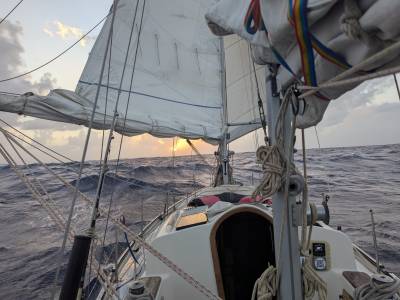
Neil est à bord de son ketch de 41 pieds, le Supertaff, et traverse l'Atlantique.
La nuit dernière, nous avons essuyé quarante nœuds de vent sur le pont et le Supertaff déferlait sur les vagues atlantiques abruptes à environ dix nœuds. Une mer bruyante, agitée et puissante. On reste concentré par nécessité, non par courage. Au large, le rôle du skipper est d'absorber la peur pour que le reste de l'équipage n'ait pas à la ressentir. On garde son sang-froid car tous les autres comptent sur nous.
Dans mon cas, la peur a une origine bien précise. Deux ans avant de fonder Boatshed, le même bateau, le Supertaff, a chaviré à 360 degrés dans le golfe de Gascogne. Conditions idéales : une mer d’une quinzaine de mètres, un vent de 90 nœuds et aucune issue favorable. Lors du chavirage, les deux mâts ont été décrochés. L’accastillage a été tordu ou arraché. Plusieurs hublots ont volé en éclats. L’intérieur a été inondé et le bateau s’est retrouvé à moitié rempli d’eau. Nous étions trois à bord, et le seul fait qui compte vraiment, c’est que nous ayons tous les trois survécu.
Le sauvetage a fait grand bruit, comme c'est souvent le cas lorsqu'un bateau chavire dans le golfe de Gascogne. Puis vint la longue étape que personne ne voit jamais : le renflouement, la reconstruction, le travail lent et méthodique de remettre le bateau sur pied, pièce par pièce. J'ai effectué la majeure partie de ce travail moi-même. De longues journées. Beaucoup d'apprentissage. Pas d'acte héroïque. Juste la simple conviction que le bateau avait encore un avenir et que je n'en avais pas fini avec lui.
Cette expérience ne s'efface pas. Elle reste tapie dans l'esprit, non pas comme un drame, mais comme une phobie qu'on apprend à gérer pour qu'elle n'entrave pas les décisions suivantes. Quand le Supertaff se met à déferler sur une vague la nuit, projetant des embruns partout, ce souvenir ressurgit comme un signal d'alarme interne. On le sent, puis on le refoule et on se concentre sur l'essentiel. Voilà ce qu'est le leadership en mer. Et, comme je l'ai appris plus tard, c'est aussi le leadership à terre : reconnaître la peur, faire taire le brouhaha ambiant, et continuer d'avancer.
Après le chavirage, je n'ai pas fui les bateaux. Au contraire, je me suis rapproché d'eux. Je voulais toujours vivre sur l'eau et trouver un moyen d'en vivre durablement. J'ai envisagé toutes les possibilités, de la restauration à la musique en passant par divers petits boulots sur les bateaux. J'ai même songé à acheter une agence de courtage en Espagne et à descendre sur place pour la gérer, avant de réaliser que mon espagnol était déplorable et le prix encore pire.
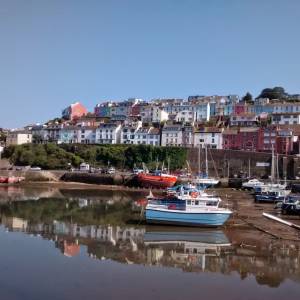
Puis Lawrence est apparu avec une petite agence de courtage à Milford Haven. Cinq mille livres et une petite part des bénéfices la première année. Une affaire réalisable, pas un rêve. On a tendance à dénigrer Milford Haven, la qualifiant de « pas une vraie destination pour le yachting », mais c'est l'opinion générale du secteur. La réalité était tout autre : des gens sympathiques, un port en activité, des bateaux utilisés plutôt qu'exhibés. Cela me convenait parfaitement.
Ce à quoi je ne m'attendais pas, c'était la distance. Milford Haven est magnifique, mais isolé. Et les acheteurs ne voyagent pas pour rien. C'était le premier problème. Le second, c'était ma façon de penser. Je n'avais jamais rien vendu de ma vie et je n'avais aucun intérêt pour la performance ou le raffinement. Dans le milieu du courtage, on attendait de moi que je vante les mérites des bateaux. Je n'étais pas prêt à minimiser les défauts au cas où un acheteur aurait fait des heures de route et découvert une tout autre réalité à son arrivée.
Les conversations se sont déroulées ainsi :
« Eh bien Neil, si le bateau est aussi mauvais que tu le dis, je ne me donnerai pas la peine de venir. »
Non pas de l'hostilité, mais de la logique. Les acheteurs détestent l'ambiguïté, et j'avais une peur bleue d'en créer. Alors j'ai surcompensé dans l'autre sens.
Le déclic s'est produit presque par hasard. J'ai commencé à prendre des photos. Des tas. Des dizaines à la fois. Développées chez le labo photo. Envoyées à tous ceux que ça intéressait. Pas une stratégie, juste le seul moyen honnête que je connaissais pour donner une image complète de la situation, sans exagérer ni minimiser les faits.
Et tout a changé. Des gens sont venus. Des offres ont été faites. Des bateaux ont été vendus. Non pas parce que j'ai convaincu qui que ce soit, mais parce que l'incertitude avait disparu. L'information a fait le travail. Mon rôle est devenu de faciliter les choses plutôt que de persuader.
Ce moment, dans un minuscule bureau de Milford Haven, a donné naissance au modèle Boatshed. La transparence est préférable au théâtre. Les détails sont plus importants que les beaux discours. Montrez la réalité dès le départ et les gens pourront agir sans crainte.
Et au large, par quarante nœuds, le principe est le même : supprimer le bruit, faire remonter la vérité à la surface et rester opérationnel.
Note de Neil :
CEO@Sea est ma façon de profiter de cette traversée de l'Atlantique pour partager mon expérience et raconter comment j'ai fini par diriger Boatshed. Ce n'est pas un cours magistral, mais simplement le récit de mon parcours entrepreneurial : une décision, une erreur, une illumination à la fois. Boatshed est né de cet état d'esprit, pas d'un plan d'affaires. Si cette vision vous parle, les opportunités sur BoatshedBusiness.com sont ouvertes à tous ceux qui souhaitent créer leur propre entreprise, à leur manière. Pas besoin de présentation. Juste une porte ouverte.